


Avoid These Courier Packaging Mistakes
Most parcels that arrive damaged were not handled badly — they were packed badly. After years of moving freight across South Africa, the same handful of packing errors account for most of what we see go wrong. Here is each one, why it fails, and what to do instead.
Get an instant quote →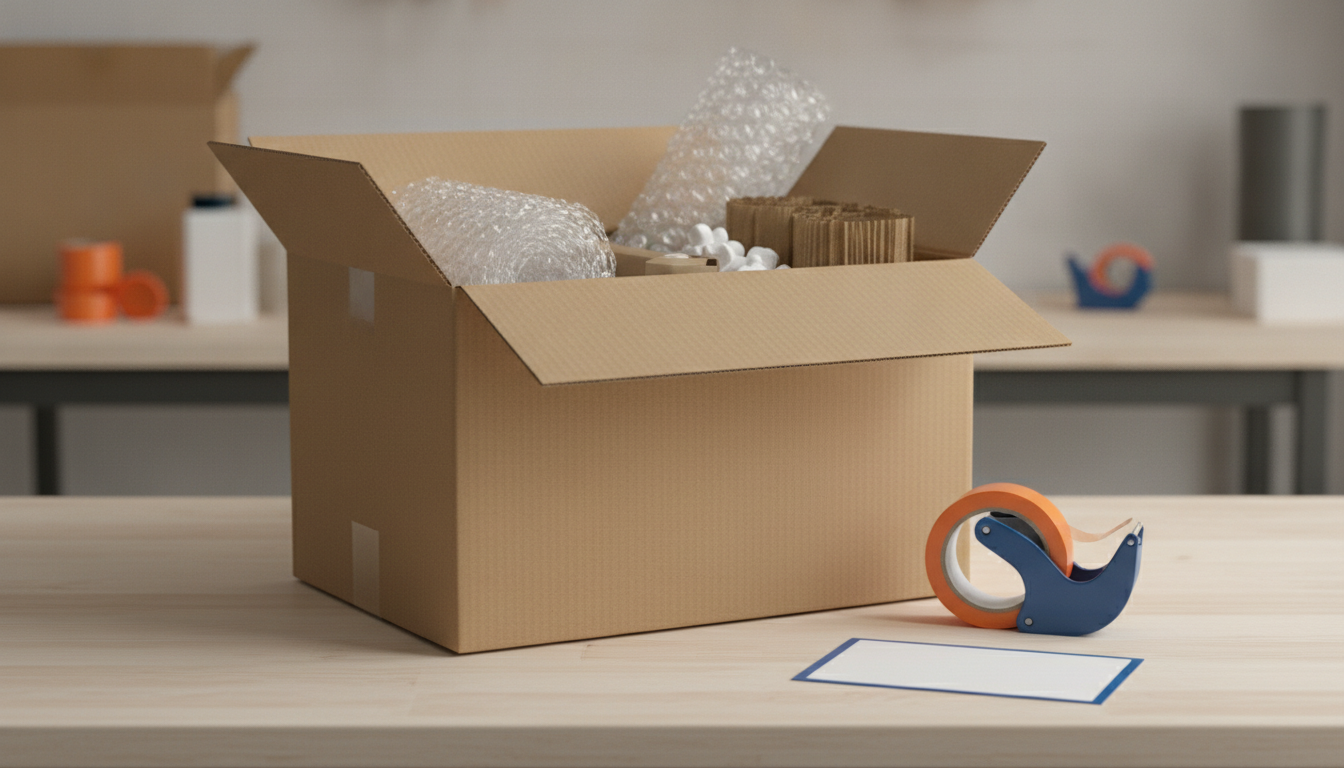
Mistake 1 — Using a box that is too big
An oversized box is the most expensive mistake on this list, because it costs you twice. The contents slide around and take the impact of every corner and stop, and couriers bill on volumetric weight, so you also pay for the empty air you shipped.
The rule that prevents it: no movement. If the contents can shift inside the box, they can break. Size the box to the goods and fill every void.
Mistake 2 — Wrapping with newspaper
What to do instead
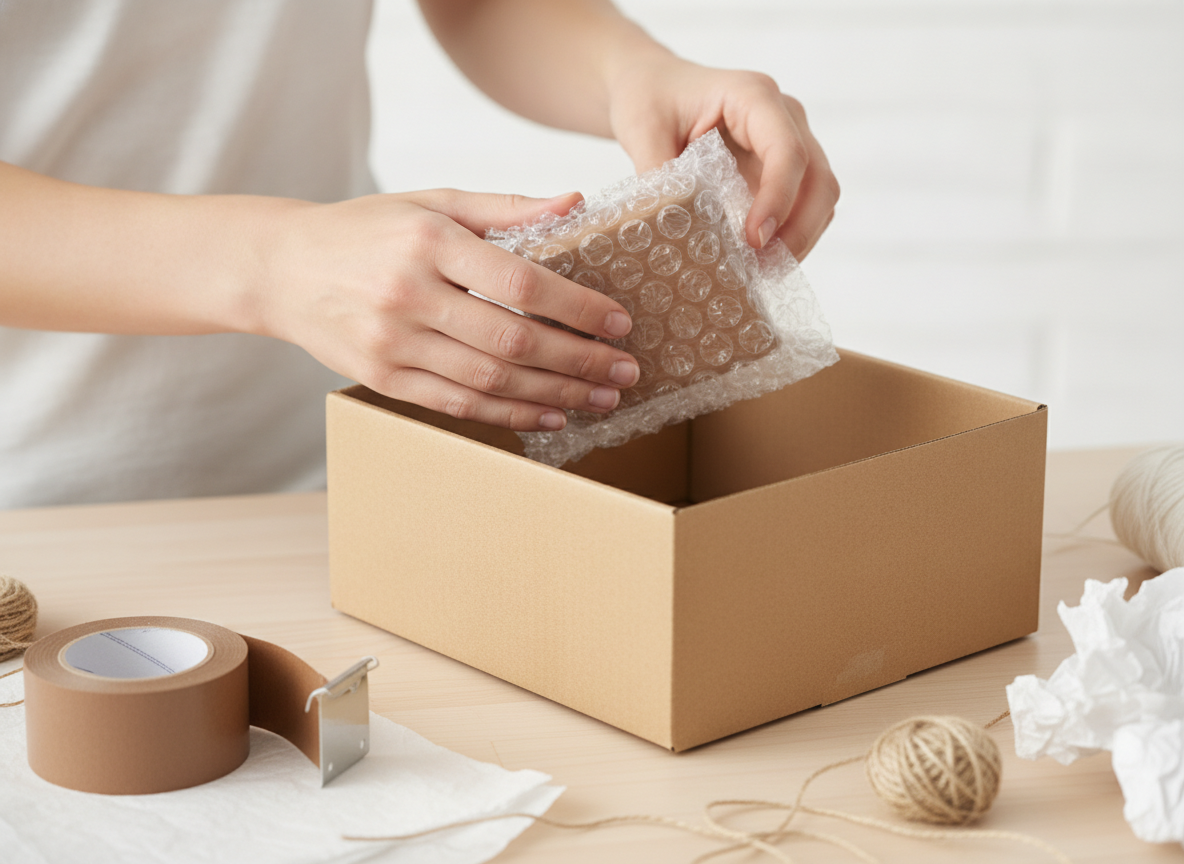
Newspaper feels like protection but flattens under pressure and then absorbs nothing for the rest of the trip. Use cushioning that recovers its shape.
- Place items in an inner box and wrap in bubble wrap.
- Items in a parcel should not touch, so they cannot knock against each other.
- Use a rigid cardboard box, sealed so it cannot spring open.
Mistake 3 — Packing fragile goods like everything else
Match the protection to the contents
Fragile goods need a cushioning material chosen for the item, not whatever is left over:
Bubble wrap
Foam sheeting
Moulded foam
Poly chips

Mistake 4 — Reusing a box that has already done a trip
A carton loses strength every journey it makes. One that is crushed at a corner, softened by damp, or already covered in tape has spent most of the protection it was made with — and it will not survive being stacked again.
Do
- Use a corrugated, double-walled box.
- Match the box strength to the weight.
- Seal open edges top & bottom.
Don't
- Strap parcels together or bind them.
- Reuse a soft or damaged box.
- Leave gaps where items can shift.
Mistake 5 — Taping only the centre seam
A single strip down the middle leaves both ends free to lift, and that is exactly where a stacked load presses. Tape the centre seam and both edges — an H pattern — on the top and the bottom of the box.
Mistake 6 — Old labels, missing details
Two small errors cause a surprising share of delayed parcels: leaving a previous trip's label on the box, which gives the sorting network two conflicting destinations, and leaving off a contact number, which strands a driver who cannot find an address.
Seal the parcel. Open edges top and bottom with plastic or reinforced carton tape.
Remove every old label, then attach the new one in a clear plastic envelope and write the waybill number on the package too.
Address accurately. Recipient address and postcode clearly written, a working contact number, your own details inside and out, documentation complete.
"A parcel that can't move inside its box is a parcel that survives the journey."
Mistake 7 — Sending something a courier may not carry
Some goods require a Dangerous Goods Declaration and specialised packaging, and are not permitted on an airline under Civil Aviation Authority rules. They are easy to send by accident, because most of them are ordinary household items. Common hidden dangerous goods include:
Batteries
Aerosols
Flammables
Magnets
Auto parts
ICExpress reserves the right to inspect any consignment suspected of containing these items. Failure to comply may lead to confiscation and legal proceedings.
Mistake 8 — Shipping without insurance
Packing well lowers the odds of damage; it does not carry the risk for you. Without goods-in-transit cover, a shipment travels at the owner's risk — so for anything you could not comfortably replace, arrange cover before it leaves.
Getting it right, step by step
This article covers what goes wrong. If you want the full method instead — choosing the box, cushioning, sealing, labelling and the volumetric weight formula — read our guide to packaging a courier parcel safely, which walks through the whole process in order.
Need a courier you can rely on?
Get an instant delivery quote in under a minute — no account needed.